
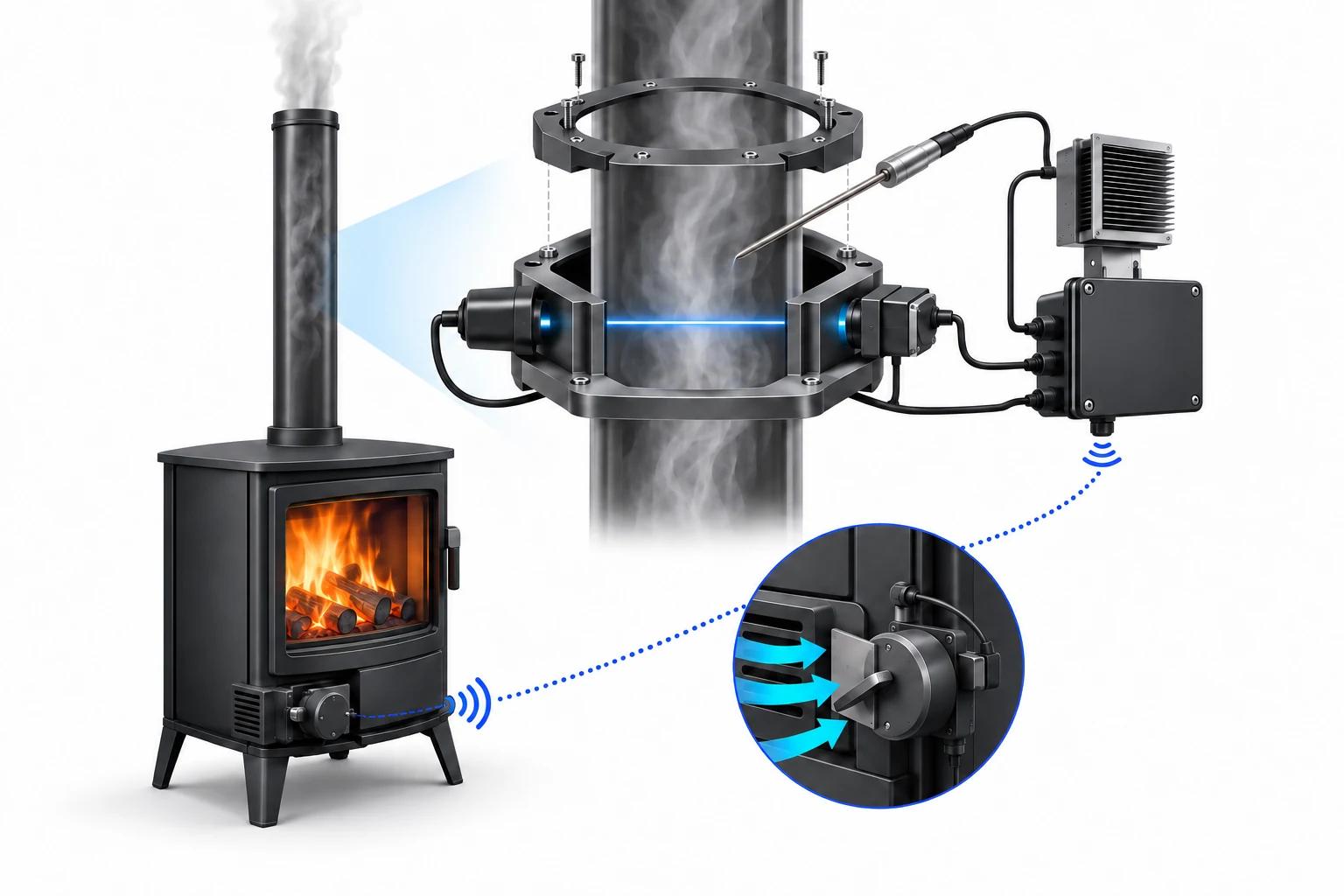
A connected approach to combustion control
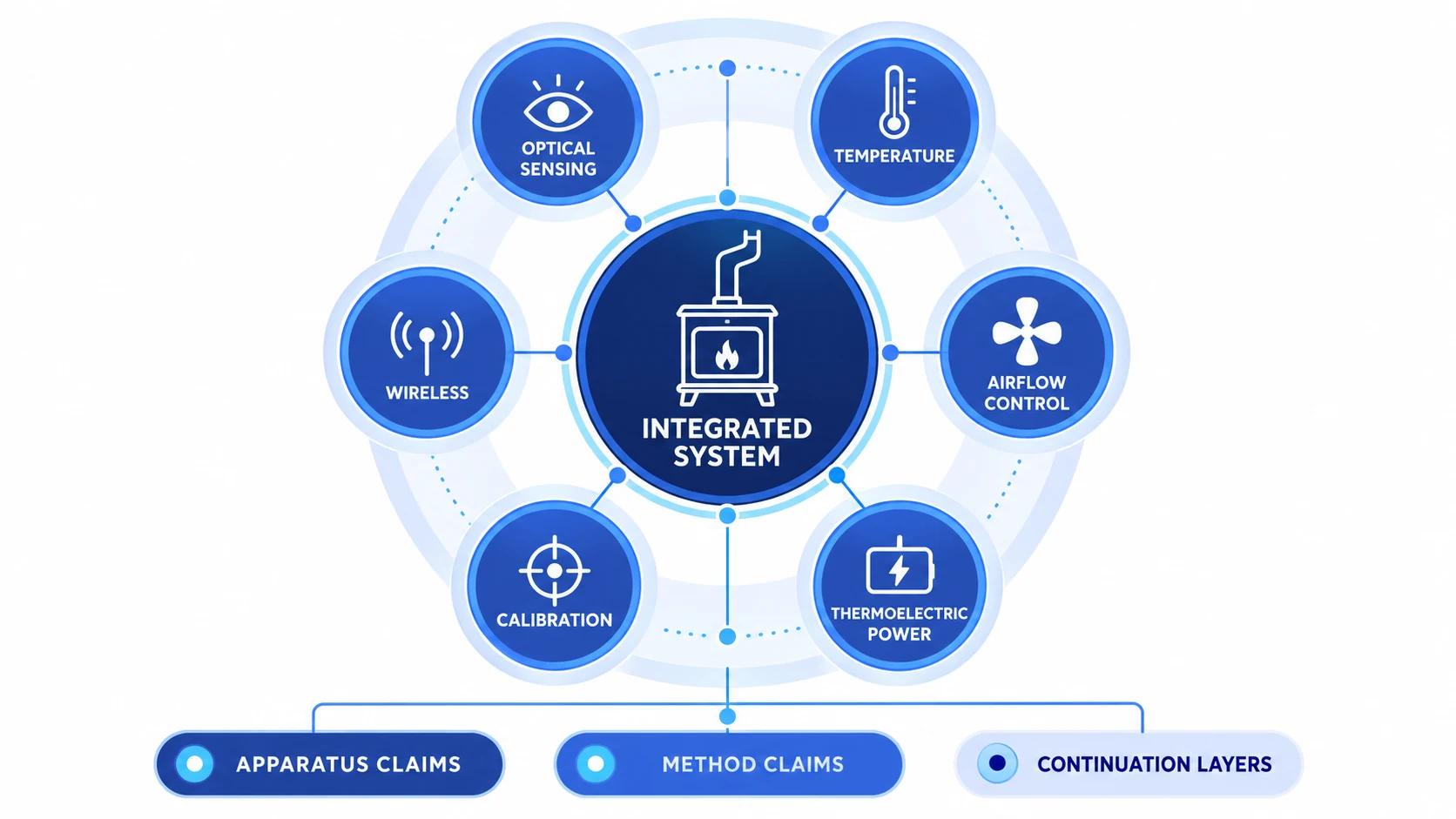
The patent disclosures connect exhaust measurement to action: smoke-opacity sensing, temperature context, processing, communication and fresh-air adjustment. Self-power and calibration features address practical deployment constraints near a hot flue.
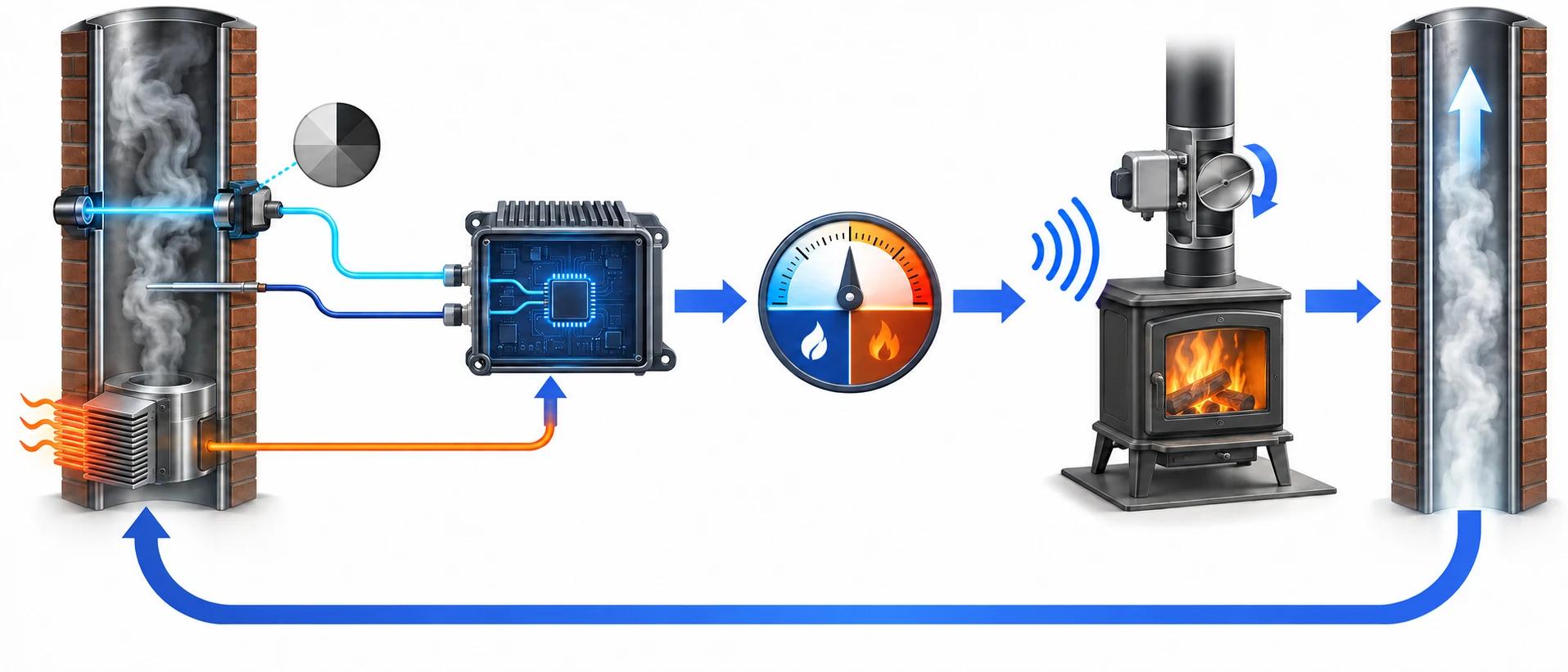
From measurement to response
An optical beam traverses the exhaust stream. A temperature probe supplies context, electronics interpret the measured conditions, and control signals can adjust fresh-air flow or inform the operator. Thermoelectric generation and calibration support continued operation.
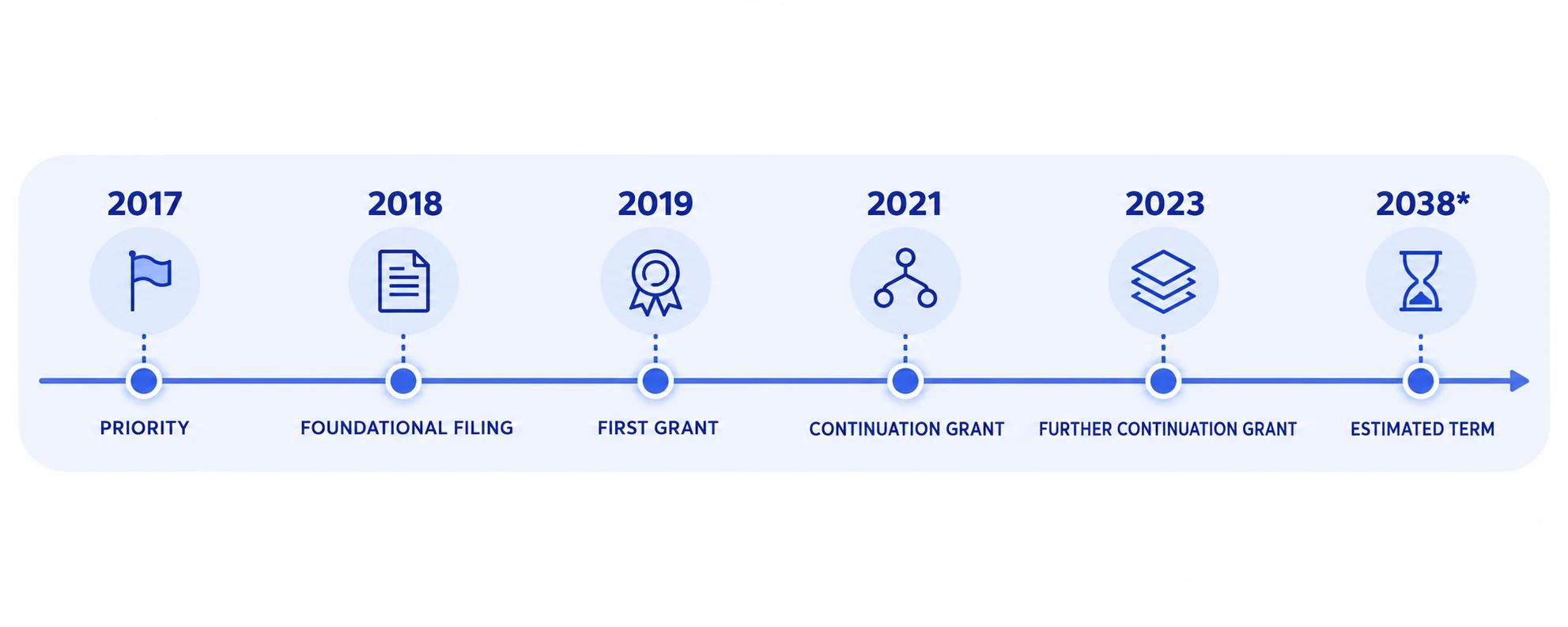
Portfolio timeline
The family has January 2017 priority, a foundational 2018 filing, and U.S. grants in 2019, 2021 and 2023. The continuations develop complementary apparatus, method, communication, self-power and calibration combinations.
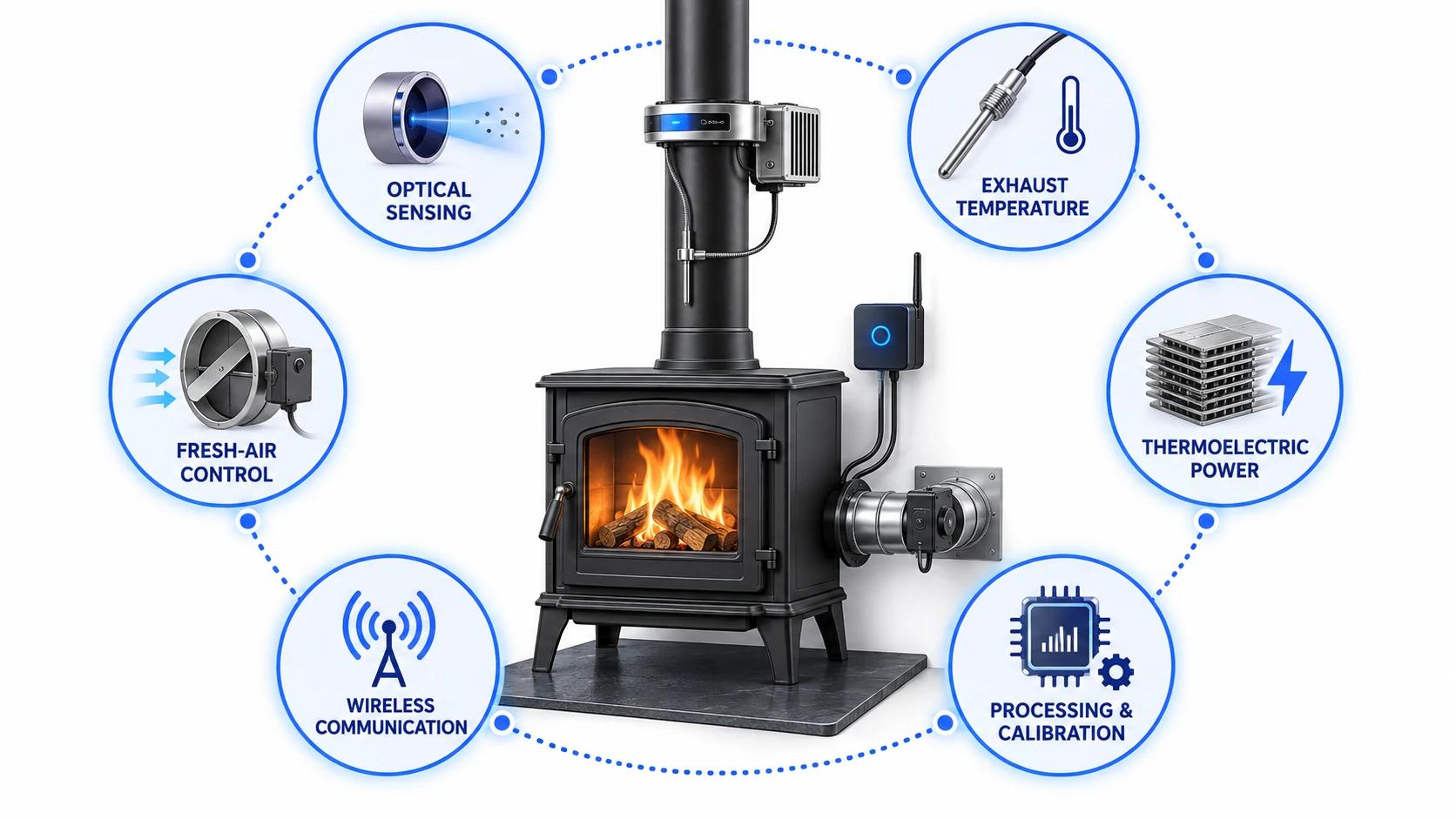
Complementary claim themes
The issued family addresses the integrated system and the relationships among its components. A buyer should map priority products against issued independent and dependent claims and review prosecution histories.
- Exhaust-stream optical and temperature sensing
- Smoke-opacity interpretation and airflow response
- Thermoelectric power, wireless operation and calibration
Commercial pathways and buyer fit
The opportunity may suit buyers with manufacturing, distribution, combustion-engineering, control-electronics or connected-appliance capabilities.
- Wood-stove and fireplace OEMs: evaluate integration into new products.
- Chimney and flue accessory providers: evaluate suitable retrofit monitoring systems.
- Combustion-control and sensor companies: evaluate component or module licensing.
- IP investors: assess claim coverage and potential licensee categories.
Acquisition and diligence
The source portfolio describes potential structures including outright acquisition, field-of-use licensing, an option or staged licence, or a strategic partnership. IIPLA’s current brokerage intake focuses on patent sales and acquisition enquiries; other transaction paths require a separate agreed scope. Begin with confidentiality terms, then review the patent schedule, claim charts, title, prosecution, maintenance records and technical evidence. Transaction structure and economics are discussed directly with the team.
- Confirm chain of title and seller-reported encumbrance information.
- Verify operative expiration, maintenance fees and terminal disclaimers.
- Assess validity, enforceability, freedom to operate and technical feasibility.
- Validate engineering, safety and regulatory requirements for any product path.