
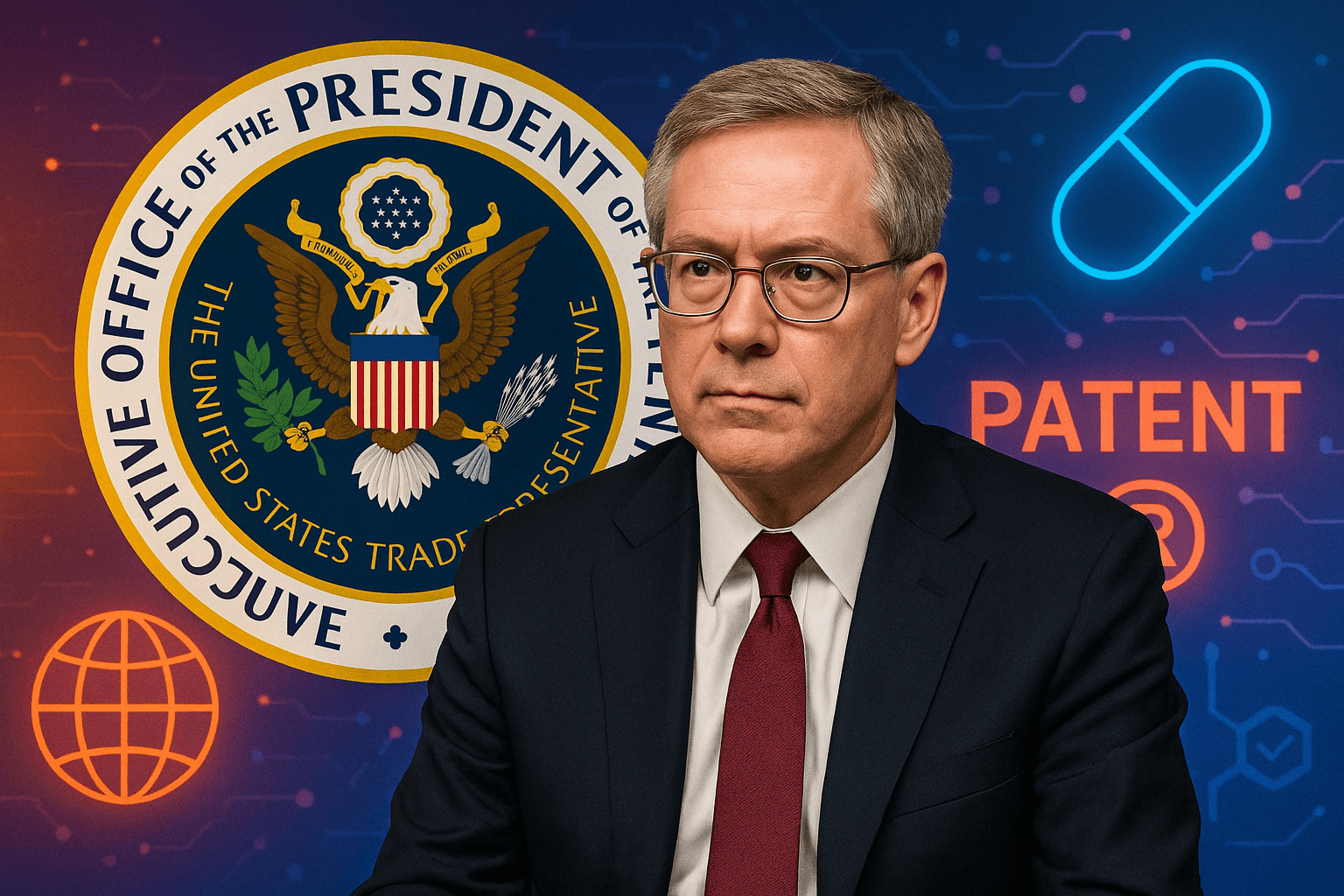
India remains on the United States’ Priority Watch List following the release of the latest Special 301 Report by the Office of the United States Trade Representative (USTR) on April 30. The report highlights enduring disagreements between the two countries over India’s intellectual property (IP) framework, with a particular focus on pharmaceutical patent rules, data protection, and enforcement.
While inclusion on the Priority Watch List does not result in immediate penalties, it is widely regarded as a strategic tool by Washington to influence future trade negotiations and policy discussions. India has been a fixture on this list since the 1990s, reflecting a persistent policy divide over the balance between intellectual property rights and public health priorities.
The Special 301 process is an administrative review mechanism rather than a binding legal action. However, countries identified in the report often face sustained diplomatic pressure and may encounter more stringent demands during bilateral or multilateral trade talks.
In its 2024 review, the USTR examined the IP regimes of 25 countries. Vietnam was elevated to the “Priority Foreign Country” category, potentially opening the door to further investigation, while India joins China, Chile, Indonesia, Russia, and Venezuela in facing heightened scrutiny.
Central to the U.S.-India dispute is India’s approach to pharmaceutical patents. U.S. authorities argue that India’s policies are overly restrictive and have repeatedly advocated for “TRIPS-plus” standards—measures that exceed the requirements of the World Trade Organization’s Agreement on Trade-Related Aspects of Intellectual Property Rights (TRIPS).
India, for its part, asserts that its IP framework is fully compliant with WTO obligations and is designed to ensure access to affordable medicines. One of the most debated aspects is Section 3(d) of India’s patent law, which bars the patenting of new forms of known drugs unless they demonstrate enhanced therapeutic efficacy. This provision is intended to prevent “evergreening,” where minor modifications are used to extend patent monopolies.
Section 3(d) was notably upheld in the landmark Novartis v. Union of India case, where the Supreme Court denied a patent for a modified cancer drug, paving the way for the introduction of lower-cost generic alternatives.
The U.S. has also raised concerns about India’s compulsory licensing provisions, which allow domestic companies to produce patented drugs under certain conditions. India has exercised this authority only once, in the Bayer Corporation v. Natco Pharma Ltd. case, to facilitate access to a high-cost cancer medication.
Another contentious issue is India’s refusal to grant data exclusivity for pharmaceutical products. The U.S. typically seeks a minimum five-year protection period for clinical trial data, arguing that such measures incentivize innovation. India counters that data exclusivity is not mandated by TRIPS and would delay the entry of generics, thereby increasing drug costs.
Health experts caution that adopting stricter IP protections could restrict access to essential medicines, particularly in low- and middle-income countries. India’s stance has global ramifications, as the country supplies nearly 20% of the world’s generic medicines, often reducing treatment costs by up to 90%. Its role as a major exporter of affordable drugs is critical to healthcare systems worldwide.
Ajay Srivastava of the Global Trade Research Initiative warned that acquiescing to U.S. demands could have significant consequences. “Accepting U.S. demands would weaken India’s generics industry—often called the ‘pharmacy of the world’—and harm patients globally, including in the U.S.,” he stated. Srivastava emphasized the importance of preserving key legal safeguards: “India should avoid diluting critical provisions such as Section 3(d) and compulsory licensing, and must ensure its intellectual property regime is not compromised through commitments in future free trade agreements.”
Beyond pharmaceutical patents, the U.S. report also points to enforcement challenges in India, including piracy, counterfeiting, and judicial delays. The absence of a dedicated trade secrets law and the impact of drug price controls are also cited as areas of concern.
Indian officials argue that these issues are operational rather than systemic. They note that trade secrets are protected through contractual agreements and common law, while drug price regulation—overseen by the National Pharmaceutical Pricing Authority—is essential in a price-sensitive market.
Authorities also highlight ongoing reforms aimed at improving patent processing times and strengthening enforcement capacity, underscoring India’s commitment to refining its IP system while safeguarding public health.
U.S. Maintains India on Priority IP Watch List Amid Ongoing Disputes Over Drug Patents The United States has once again placed India on its Priority Watch List in the 2024 Special 301 Report, citing ongoing concerns over India's pharmaceutical patent policies, data protection, and enforcement mechanisms.... Read the full IIPLA article: https://iipla.org/news/u-s-maintains-india-on-priority-ip-watch-list-amid-ongoing-disputes-over-drug-patents